Concept

Website concept for review. Design notes explain each section.

New patients welcome · Athletes, active adults and families

Knee

Knee Conditions & Procedures in Rochester Hills, Michigan

Knee treatment for athletes and active adults dealing with knee pain, injuries and mobility problems, with a focus on pain relief and return to activity.
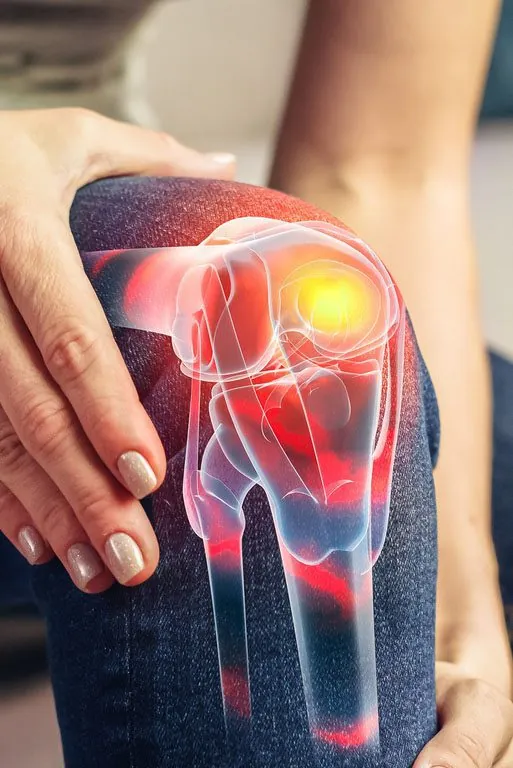
A clinician examining a patient's knee

Knee care

Common knee conditions we treat

Our team diagnoses and treats conditions affecting the knee joint, ligaments, cartilage and surrounding structures. Early diagnosis and treatment are important to reduce pain, restore mobility and help you return to activity safely.

We use imaging and surgical planning tools to personalize knee procedures, including partial and total knee replacement, to improve outcomes and support long-term joint health.

Knee treatments at RHO

  • Physical therapy and bracing
  • Injections, including PRP
  • Knee arthroscopy
  • Meniscus repair
  • ACL and multi-ligament reconstruction
  • Partial and total knee replacement
Book an appointment

ACL injuries

An ACL injury is one of the most common knee injuries, especially in sports that involve cutting, pivoting or rapid changes of direction. Many patients feel a pop at the time of injury, followed by pain, swelling and instability. Without proper treatment, the knee may feel unstable during activity.

Treatment may include rehabilitation or ACL reconstruction, depending on the severity of the tear and your activity level. After surgery, physical therapy, return-to-sport testing and mental performance training all happen in our building.

ACL recovery

What recovery after ACL surgery usually looks like

Most athletes return to their sport about nine to twelve months after surgery, once strength, hop and movement tests show the knee is ready.

The typical road back after ACL surgery

  1. Weeks 0–2Protect & settleCalm the swelling, get the knee straight, walk safely.
  2. Weeks 2–12RebuildMotion, quad and hip strength, balance.
  3. Months 3–6Run & jumpRunning and landing drills once you're cleared for them.
  4. Months 6–9Sport skillsCutting, pivoting and practice, step by step.
  5. Month 9+Test & returnStrength symmetry, hop tests, dorsaVi testing and confidence.

Typical ranges. Every athlete's clearance is individual and based on testing, not the calendar.
Meniscus & cartilage injuries

Meniscus tears are a common knee injury, especially in athletes who play contact sports. They also affect active adults through twisting, sudden stops or heavy lifting. A tear in the meniscus can cause pain, swelling and limited movement.

Many tears can be treated with rehabilitation, while more severe tears may need surgery to restore function and stability. Damage to the cartilage that covers the ends of the bones can lead to pain and stiffness; cartilage restoration procedures are an option for some patients.

Arthritis and knee replacement

Arthritis is a common cause of knee pain and stiffness, especially with age. It can make walking, climbing stairs or standing for long periods harder.

When non-surgical treatments no longer help, a partial or total knee replacement may be recommended to relieve pain and restore mobility. When arthritis is limited to one part of the knee, a partial replacement keeps the healthy parts; Dr. Perkins has published research on minimally invasive partial knee replacement. Many joint replacements are done as outpatient surgery at the on-site surgery center.

Multi-ligament knee reconstruction

Some knee injuries damage more than one ligament. Dr. Ball performs ACL and multi-ligament knee reconstructions to restore stability and movement in these complex injuries, for amateur and professional athletes alike.

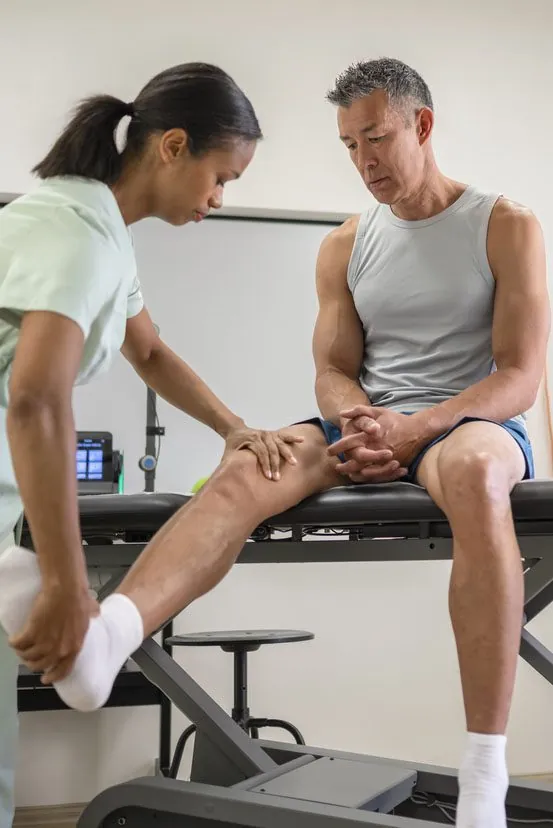
A physical therapist working with a patient

Recovery

Knee rehabilitation & recovery

Recovery from a knee injury or procedure focuses on restoring strength, stability and range of motion. Physical therapy is a key part of the process, helping you rebuild movement and return to activity safely.

Rehabilitation plans are tailored to the injury, the procedure and your performance goals, and our therapists follow the surgical protocols set by our surgeons, in the same building.

Common questions about knee conditions & treatment

What causes knee pain?

Knee pain can be caused by ligament injuries, meniscus tears, arthritis, overuse or instability. Sports, repetitive motion and aging are common factors. A proper evaluation helps find the cause and the best treatment plan.

When should I see a doctor for knee pain?

See a specialist if knee pain lasts more than a few weeks, limits movement or affects daily activity. Get seen sooner after a pop with swelling, or if the knee locks, catches or gives way. Early treatment can prevent further damage.

Can knee injuries heal without surgery?

Many knee injuries can be treated without surgery using physical therapy, bracing and activity changes. Surgery may be recommended if the injury is severe or doesn’t improve with non-surgical care.

What is an ACL injury?

An ACL injury is a tear or sprain of one of the main ligaments in the knee. It often happens in sports with sudden stops or changes of direction. Symptoms include pain, swelling and instability. Treatment depends on the severity of the injury and your activity goals.

How long does it take to recover from knee surgery?

It depends on the procedure and the injury. Some patients recover in a few months; others take longer to regain full strength and stability. After ACL reconstruction, most athletes return to sport about nine to twelve months after surgery.

Can I return to sports after a knee injury?

Most patients can return to sports after proper treatment and rehabilitation. The timeline depends on strength, stability and the type of injury, and clearance is based on testing, including dorsaVi movement analysis.

How can I prevent knee injuries?

Improving strength, flexibility and movement patterns, warming up properly and allowing time to recover all lower the risk. Our team can evaluate how you move and build a plan to reduce injury risk.

Hurt? Let's find out why.

Book online in a few minutes, or call and we'll find the soonest visit.